The rise of socialism in the modern United States
By Matthew Parish, Associate Editor
Saturday 27 June 2026
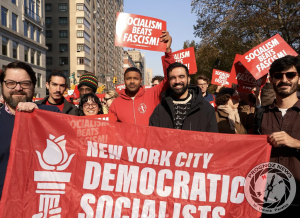
The recent primary victories of candidates endorsed by Zohran Mamdani have sent a tremor through American politics. In a matter of days, several establishment Democratic figures found themselves defeated by younger, more openly socialist challengers, prompting headlines about a “socialist earthquake” within the Democratic Party.
Yet before predicting a socialist takeover of the United States Congress in the 2026 mid-term elections, it is worth examining both the strengths and the limitations of what has just occurred.
The first point to appreciate is that these victories are not isolated accidents. Mamdani’s own rise from state legislator to mayor of New York City represented a profound shift in the politics of America’s largest city. His success demonstrated that an openly democratic socialist politician could assemble a coalition of young voters, renters, immigrants, university graduates and economically anxious urban professionals. The victories of Brad Lander, Claire Valdez and Darializa Avila Chevalier suggest that this coalition can now be transferred to other candidates.
What makes this movement significant is not socialism in its classical twentieth-century form. Few of these politicians advocate state ownership of industry or central planning. Rather they represent a distinctly American form of democratic socialism focused upon housing costs, healthcare, childcare, labour rights, wealth inequality and opposition to corporate concentration. Their rhetoric is often populist rather than doctrinaire. They present themselves less as revolutionaries than as defenders of ordinary people against an economic system perceived to favour asset owners over workers and renters.
This message resonates because the United States is experiencing a paradox. By many conventional economic indicators the country remains extraordinarily prosperous. Yet large numbers of younger Americans feel poorer than their parents. Home ownership has become unattainable in many metropolitan areas. University education frequently leaves graduates burdened with debt. Healthcare costs remain high. Secure middle-class employment feels increasingly elusive. The appeal of politicians promising structural reform is therefore unsurprising.
However it would be a mistake to extrapolate New York City’s political environment to the entire United States.
New York is among the most left-leaning large cities in America. Its electorate differs dramatically from those of suburban districts in Pennsylvania, Michigan, Wisconsin, Arizona or Georgia, where control of Congress is likely to be determined. A candidate who comfortably wins a Democratic primary in Brooklyn may struggle to win a competitive general election in a district where independent voters decide the outcome.
This reality explains the nervousness visible among Democratic leaders. They understand that primary electorates are often more ideological than general-election electorates. While socialist candidates may thrive in heavily Democratic urban districts, the party must also win marginal seats if it wishes to secure a congressional majority. Several senior Democrats have already expressed concern that some of the movement’s more radical rhetoric could prove politically costly outside major cities.
Moreover American political history is littered with movements that appeared unstoppable until they encountered the institutional realities of national elections. The Tea Party transformed Republican primaries but never fully remade the country in its own image. Likewise the progressive surge associated with figures such as Bernie Sanders and Alexandria Ocasio-Cortez reshaped Democratic discourse without producing a socialist majority in Congress.
What is more likely is a gradual rather than revolutionary transformation. Socialist and democratic socialist legislators will probably increase their numbers in the House of Representatives. Their influence over Democratic policy formation will grow. Their ideas regarding housing, healthcare and economic inequality will become increasingly mainstream within the Democratic coalition. Yet that is not the same as overrunning Congress.
The deeper significance of Mamdani’s victories lies elsewhere. They reveal that the Democratic Party is engaged in an internal struggle over its future identity. One faction believes electoral success depends upon moderation and appeal to centrist voters. Another argues that voters are hungry for bold economic reform and that caution merely produces stagnation. The New York primaries have strengthened the latter argument.
Whether that argument can succeed beyond America’s largest cities remains uncertain.
The most probable outcome of the 2026 mid-terms is therefore not a socialist conquest of Washington, but a continued expansion of a socialist-influenced progressive wing within the Democratic Party. The movement surrounding Mamdani has clearly demonstrated momentum. It has demonstrated organisational skill. It has demonstrated electoral appeal in favourable terrain.
What it has not yet demonstrated is the ability to command a national majority.
That remains the test that every American political movement ultimately faces — and one that cannot be answered by victories in New York alone.
6 Views



Most Readings