Russia is losing her war in Ukraine
By Matthew Parish, Associate Editor
Tuesday 30 June 2026
Wars are not won merely by capturing territory. They are won by compelling an adversary to abandon the political objectives for which the conflict was begun. Judged by that standard, Russia is losing her war in Ukraine.
This conclusion may appear counterintuitive to those who examine only maps. Russian forces continue to occupy substantial areas of Ukrainian territory and, at the time of writing, continue to advance slowly in parts of the Donbas. Casual observers often assume that any army moving forwards must be winning. Yet history repeatedly demonstrates that tactical advances and strategic success are not synonymous. The distinction is one that military planners have understood for centuries, even if politicians and television commentators sometimes forget it.
When Russian forces crossed Ukraine’s borders in February 2022, the Kremlin’s apparent ambitions were expansive. Ukraine’s government was expected to collapse within days. Kyiv was to be occupied, a compliant administration installed and Ukraine returned permanently to Moscow’s sphere of influence. Russian political rhetoric questioned Ukraine’s legitimacy as an independent state, suggesting that the country itself represented an historical mistake to be corrected.
None of those objectives has been achieved.
Ukraine remains an independent state with functioning institutions. Her armed forces have expanded from a modest professional military into one of Europe’s largest and most experienced armies. Rather than diminishing Ukrainian national identity, the invasion has strengthened it profoundly. Citizens who previously spoke Russian as their principal language increasingly identify themselves first and foremost as Ukrainians. The invasion intended to erase Ukraine as a political nation has instead consolidated it.
Russia has also transformed the international environment against her own interests.
Before 2022, the enlargement of NATO had become a subject of debate within the alliance itself. Following the invasion, the discussion ended. Two historically non-aligned Nordic states sought membership, dramatically extending NATO’s frontier with Russia and reinforcing the alliance’s northern flank. Military spending throughout Europe has increased sharply, while defence industries are expanding production on a scale not witnessed for decades.
These developments represent the opposite of what Moscow claimed to seek.
Economically, Russia has undoubtedly displayed resilience. Sanctions have not produced economic collapse. Russian industry has adapted to restrictions, developed alternative trading relationships and maintained significant export revenues through redirected energy markets. Yet resilience should not be mistaken for prosperity.
An economy increasingly organised around wartime production becomes dependent upon military expenditure. Labour shortages intensify. Inflationary pressures accumulate. Civilian investment is crowded out by defence priorities. Scientific talent migrates where opportunities are greater and political constraints fewer. Such an economy may sustain war for years, but it does so by mortgaging future growth.
Military losses have likewise been extraordinary.
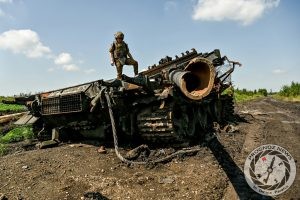
Russia continues to recruit soldiers, manufacture equipment and launch offensives. Nevertheless these capabilities have come at immense cost in personnel, armour and matériel. Modern warfare consumes resources at astonishing rates. Every kilometre gained across devastated landscapes has required sacrifices disproportionate to the strategic value of the territory acquired.
Meanwhile Ukraine continues to innovate.
Denied superiority in numbers, Ukraine has embraced technological adaptation with remarkable speed. Unmanned aerial systems, autonomous maritime drones, electronic warfare, artificial intelligence-assisted targeting and distributed battlefield intelligence have altered the character of the conflict. Ukrainian engineers, entrepreneurs and military personnel have compressed innovation cycles from years into weeks, creating an ecosystem in which battlefield experience rapidly becomes industrial development.
This transformation extends well beyond Ukraine itself. Defence establishments across the world now study Ukrainian innovations as carefully as they once examined American military doctrine. The war has become a laboratory for twenty-first century warfare, and Ukraine has frequently been its principal innovator.
Russia too has adapted. Her armed forces today are significantly more capable than those that entered Ukraine in 2022. Operational failures have generated organisational learning. Production has increased. Electronic warfare capabilities have improved. Yet adaptation born of necessity cannot disguise the underlying reality that these improvements were required because the original campaign failed so comprehensively.
Perhaps the greatest measure of Russia’s strategic failure lies not on the battlefield but in diplomacy.
Far from isolating Ukraine, the invasion has integrated her more deeply into European political, economic and military structures. Financial assistance, intelligence sharing, industrial cooperation and long-term security commitments have created relationships that would have been politically improbable before the war. Whatever eventual settlement emerges, Ukraine’s orientation towards Europe now appears irreversible.
Time is often assumed to favour Russia because of her larger population and greater industrial base. There is truth in this argument. Russia can absorb losses that would cripple many states. Yet time also favours societies capable of innovation, institutional reform and international cooperation. Ukraine has demonstrated remarkable resilience in each of these domains, despite enduring relentless attacks upon her cities, infrastructure and civilian population.
Victory, moreover, requires more than endurance. It requires a plausible political end-state.
What would constitute Russian victory today? The conquest of all Ukraine appears militarily unattainable. The installation of a pro-Russian government in Kyiv is even less conceivable than it was in 2022. Permanent Ukrainian neutrality has become politically implausible. The destruction of Ukrainian national consciousness has manifestly failed.
Instead Russia confronts the prospect of holding devastated territories requiring continuous military occupation while facing an increasingly capable neighbour motivated by existential necessity and supported by powerful international partners.
This is not a position from which enduring strategic success is normally achieved.
None of this should encourage complacency. Wars can change direction unexpectedly. Political decisions in foreign capitals may alter levels of military support. Economic pressures may reshape domestic calculations in both countries. Negotiated settlements may emerge that neither side presently anticipates.
Nor should Russia be underestimated. She remains a nuclear power with formidable industrial capacity, extensive natural resources and an ability to mobilise society during prolonged conflict. States possessing such attributes are rarely defeated quickly.
Nevertheless the central paradox of the war remains unmistakable.
Russia sought to extinguish Ukrainian independence but instead strengthened it. She sought to weaken NATO but revitalised it. She sought to dominate her neighbour but accelerated Ukraine’s integration with Europe. She sought security through conquest but has instead generated a more hostile strategic environment along much of her western frontier.
These are not the hallmarks of victory.
History will ultimately judge the outcome of this war not by the precise location of the front line on any particular day, but by whether Russia accomplished the political objectives for which she chose to wage it. By that measure, despite undeniable battlefield gains and formidable military endurance, Russia has progressively moved further away from success.
Empires often discover too late that the greatest defeats are not suffered in dramatic routs but accumulated gradually through objectives that recede further into the distance with every apparent advance.
That is the danger confronting Russia today. She may continue to occupy territory, continue to mobilise resources and continue to fight. Yet unless those sacrifices bring her closer to the political settlement she originally sought, they represent not the path to victory but the prolongation of strategic defeat.
Russia is not losing because she lacks courage or resources. She is losing because the war has steadily undermined the very purposes for which it was begun.
83 Views


Most Readings


Crimea Under Pressure: Ukraine’s Long Campaign Against Russia’s Southern Bastion
98 Views