German prosecutors’ accusations about the Nord Stream explosion
By Matthew Parish, Associate Editor
Thursday 2 July 2026
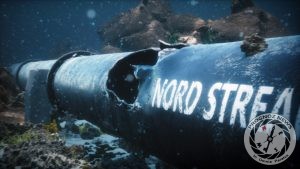
For almost four years the destruction of the Nord Stream pipelines has occupied a peculiar place in the politics of the war in Ukraine. It was one of the most consequential acts of sabotage in modern European history, yet responsibility remained shrouded in competing narratives, conspiracy theories and strategic ambiguity. Germany’s prosecutors have now moved the debate into a different phase by alleging not merely that Ukrainian nationals carried out the operation but that it was undertaken on behalf of the Ukrainian state. Those allegations, if ultimately sustained before a court, would have profound implications extending well beyond the criminal responsibility of any individual defendant. Equally, if they fail under judicial scrutiny, they will stand as a reminder of how exceptionally difficult it is to establish the truth in matters that lie at the intersection of intelligence, covert warfare and international politics.
The distinction is critical. Criminal indictments are allegations, not findings of fact. German prosecutors plainly believe they possess sufficient evidence to justify bringing charges, and Germany’s legal system is not one that habitually launches politically motivated prosecutions without extensive investigation. Nevertheless the burden of proof remains substantial. The evidence will need to withstand adversarial examination in open court, where witness testimony, forensic analysis, communications intercepts and documentary records can all be challenged. The transition from investigative suspicion to judicial certainty is often far greater than public discussion appreciates.
Should Germany ultimately demonstrate that the sabotage was ordered by organs of the Ukrainian state, the political consequences would be considerable. Germany has become Ukraine’s principal European military supporter, investing enormous political capital and financial resources in Kyiv’s defence against Russia’s invasion. The revelation that elements of the Ukrainian state authorised an attack upon infrastructure directly connected with Germany would inevitably provoke searching questions within German politics about trust between allies and about the extent to which wartime expediency can justify unilateral covert operations affecting friendly states.
Yet the context cannot be ignored. The Nord Stream pipelines were never ordinary commercial infrastructure. Even before Russia’s full-scale invasion in February 2022 they had become symbols of Europe’s strategic dependence upon Russian energy. Critics had long argued that Nord Stream represented a geopolitical instrument through which Moscow could divide Europe, bypass Ukraine as a transit state and deepen Germany’s economic reliance upon Russian gas. Following the invasion, that criticism intensified dramatically. Although Nord Stream 2 never entered commercial operation, the pipelines remained emblematic of an energy relationship that many European governments had come to regard as a grave strategic error.
From a Ukrainian strategic perspective, if the allegations prove true the calculation is not difficult to reconstruct even if it remains legally and diplomatically contentious. Every cubic metre of Russian gas exported to Europe represented revenue available to finance Russia’s military campaign. Preventing any future restoration of that revenue stream could therefore be viewed, by military planners, as a legitimate contribution to Ukraine’s national defence. That reasoning would explain the strategic objective without necessarily resolving the legal question.
International humanitarian law complicates matters further. Civilian infrastructure ordinarily enjoys protection from attack. However infrastructure that makes an effective contribution to military action may lose aspects of that protection if its destruction offers a definite military advantage. Whether Nord Stream satisfied that test is far from obvious. The pipelines transported a commodity whose proceeds ultimately entered the Russian state budget, but they were not themselves military installations. Prosecutors appear to argue that the destruction constituted an unlawful attack upon protected civilian infrastructure, potentially amounting to a war crime. Defence lawyers are likely to contend that the pipelines formed part of Russia’s broader war-sustaining economic machinery. The resulting legal debate may become one of the most significant judicial examinations yet of how international humanitarian law applies to economic infrastructure in modern interstate conflict.
The diplomatic consequences are equally delicate. Germany and Ukraine remain partners confronting a common adversary. Berlin has every incentive to preserve that relationship while simultaneously demonstrating that its criminal justice system operates independently of political convenience. That balance is not impossible. Democratic states distinguish between the conduct of criminal investigations and the maintenance of diplomatic alliances. Prosecuting individuals accused of serious offences need not automatically entail the collapse of broader strategic cooperation.
Russia, unsurprisingly, is likely to treat the German proceedings as vindication of claims it has advanced since 2022. Yet Moscow’s own credibility has been profoundly diminished by its repeated dissemination of demonstrably false narratives concerning the war. The fact that Russian propaganda may benefit politically from German allegations does not determine whether those allegations are true. Equally, the understandable desire among Ukraine’s supporters to resist Russian information operations cannot justify dismissing evidence without examination. Democratic societies depend upon precisely the opposite instinct: allowing courts rather than propaganda ministries to determine disputed facts.
This episode also illustrates the uncomfortable realities of coalition warfare. States facing existential threats frequently undertake covert actions whose legality, proportionality and political wisdom become apparent only years later. History contains numerous examples of allies quietly disagreeing over clandestine operations while maintaining broader strategic partnerships. Such tensions are neither unprecedented nor necessarily fatal to alliances, provided they are ultimately managed within institutions governed by law rather than political expediency.
Perhaps the most important lesson lies in the resilience of legal institutions themselves. The Nord Stream investigation has proceeded slowly, painstakingly and often frustratingly. That is not evidence of weakness but of seriousness. The temptation in politically charged cases is always to substitute certainty for proof. Germany’s prosecutors have now advanced their case into the courtroom. There, rather than in television studios or on social media, the allegations will be tested according to rules of evidence developed precisely to resolve controversies where political passions run highest.
Whatever verdict eventually emerges, the Nord Stream affair has already altered Europe’s strategic consciousness. It exposed the vulnerability of critical undersea infrastructure, accelerated Europe’s energy transformation and demonstrated how economic assets can become theatres of war even hundreds of kilometres from the battlefield. If the German prosecution succeeds, it will reshape understanding of one of the defining covert operations of the conflict. If it fails, it will reinforce an equally valuable principle: that accusations, however dramatic, remain allegations until established beyond reasonable doubt in a court of law.
74 Views



Most Readings

Crimea Under Pressure: Ukraine’s Long Campaign Against Russia’s Southern Bastion
97 Views