Not Why. How? The Evacuation of Kramatorsk
By Angela Stoop
Tuesday 11 August 2026
It seems to me that there are very few occupations that people have as much critique on or opinions about as humanitarian work in a war zone. There are, of course, the people who simply just don’t agree on supporting Ukraine, bringing to the table crooked arguments like “it will just make the war last longer and kill more people.” And then, there are many people that, agreeing with you on the simple fact that Ukraine does indeed need and deserve all the help it can get, will be very critical of how, where and with what means you do your humanitarian work.
These discussions can absolutely be helpful. If not in the practical execution of certain parts of your missions then it might be an interesting reflection on the actual impact of your work. Much depends on the person having this exchange with you and their motivation for it. In one conversation with a friend in Kherson she told me I shouldn’t be helping to make a nice environment for the children. When I asked her why not she responded “because it will make it more OK for their parents to let them stay here, they shouldn’t be here. Why are they still here when they can take them to safety?” I understand where she’s coming from, I really do. I just don’t agree with the premise that I shouldn’t be helping them based on the completely theoretical assumption that if I don’t, they will take the children out. But it is an interesting point, brought to me by someone who is living the situation and a good reflection of the impact of your work.
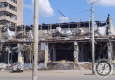
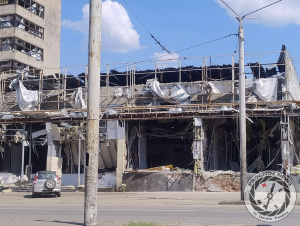
In other situations I will be asked why I go to a certain place to help. In my recent evacuation efforts in Kramatorsk, I kept getting the same question. From Ukrainians, from other volunteers and from people abroad. “Why haven’t they left yet? Why do you have to go there now, now that it is so dangerous, when there was all this time to leave?”
Another big point of contention is formed by the distribution of medical aid and training. Very understandably there is overwhelmingly a big focus on the Ukrainian military. I however choose to also focus on frontline civilians, civilian medics and volunteers. Part of that is supporting the local Red Cross chapter in Kherson. I am very critical in who and where I send medical aid. I know like no other there is not nearly enough to go around. I’ve had a working relation for years with the small Red Cross team having to manage the human safari. I know their work, their base, their equipment, their environment and the enormous amount of emergency rescue they face day and night, 24/7. It is perhaps the most criticised part of my work, material aid to civilian medics that are working for a big NGO. The general arguments? “They should get it from their own NGO” “They have more than enough” While I can agree with the first statement, I definitely don’t agree with the second. I tell people that, no they don’t have enough. They have had to resort to chinese tourniquets and they share sleeping bags with 2 or 3 people, rotating them. They make minimum wage but still somehow have to scrounge up a lot of their own work gear. And whenever I share these facts it is again met with that same, eternal question; why?
Why is an interesting question. And it is definitely a question people should look at. Someone, somewhere should look at every why that arises from the situations we see on the ground in Ukraine. However, I don’t see this as a task for active humanitarian workers. I don’t ask myself why. I would probably drive myself insane if I kept asking myself why I have to drive dangerous evacuations, why people haven’t evacuated their children, sometimes even hiding them to escape mandatory evacuation, why large NGOs can’t supply their people on the ground with everything they need. So I don’t ask why. That is a question for someone else, in another place and perhaps another time. Unraveling and solving these complicated, multilayer problems will take years. Years the people and animals I help, and by association I myself, just don’t have. We have weeks if we’re extremely lucky, days in most situations and mere hours in some. So my question is never why, it will not solve the acute problems I’m confronted with. My question is always how.
How do we get these people out of the danger zone?
How do we make sure civilian rescuers are properly equipped?
How do we make sure front line civilians can save themselves if help isn’t available?
How do we do all this and come back alive?
While I fully acknowledge, and yes, encourage the why questions, the question itself is as important as the place or person you are choosing to put this question to. Most times I do believe that the why questions have good intentions and are fueled for a large part by a desire to understand. However, it is important to keep in mind what the task is of the person you are asking the question. Humanitarian workers in a warzone are not the right tools to change acute, current socio-economic circumstances that drive decisions in the local population on a large scale. Humanitarian workers in a hot conflict are not the people who will effect big change in giant NGOs that they are not a part of. We are not here for governments, politicians, boards of directors or CEOs. We are here to help the soul to our left and the soul to our right, to the best of our abilities and with the goal of getting as many innocent lives through this violence as we possibly can.
Keep the why for where it can actually bring about critical thinking and change. That is definitely not with exhausted, overburdened, on the ground volunteers. It is for the board rooms, the study halls, the discussion platforms. It comes after the how in the Maslov pyramid of warzone realities and as long as we haven’t fully fulfilled our ‘how needs’, the people on the ground won’t be able to spend much energy on the ‘why needs’. At the end of the day, if you want to help Ukraine in its efforts to survive, why would you ask the why of these incredibly hard to deal with situations if you could ask how can I help?
95 Views



Most Readings