The Iran conflict: how is the balance of power changing in the Middle East?
By Matthew Parish, Associate Editor
Wednesday 3 June 2026
The proposition that the United States and Israel have permanently shifted the balance of power in the Gulf region in favour of Iran appears counter-intuitive at first sight. After all, the immediate military results of the 2025 and 2026 attacks were severe. Iranian nuclear facilities suffered substantial damage, senior military leaders were killed and key infrastructure was struck. Many commentators declared that Iran has emerged weaker than at any point since the Iran-Iraq War.
Yet history often demonstrates that military victories and geopolitical victories are not the same thing. The invasion of Iraq in 2003 destroyed Saddam Hussein’s regime but ultimately increased Iranian influence throughout Mesopotamia. The Soviet Union won most of the battles in Afghanistan but lost the political struggle. The question is not who inflicted the most damage during the war. The question is who emerges with greater strategic leverage once the shooting stops.
Viewed through that lens, there is a strong argument that the United States and Israel may have unintentionally strengthened Iran’s long-term position throughout the Gulf.
The first reason is that the attacks transformed Iran from a theoretical threat into an indispensable geopolitical reality.
For years, Gulf Arab states pursued a delicate balancing act. They sought American security guarantees while simultaneously improving relations with Tehran. Countries such as Saudi Arabia and the United Arab Emirates had begun cautiously rebuilding diplomatic channels with Iran because they recognised a fundamental geographical truth: Iran is not going anywhere. She possesses a population approaching 90 million people, controls the northern shore of the Gulf and occupies one of the most strategically important locations on earth.
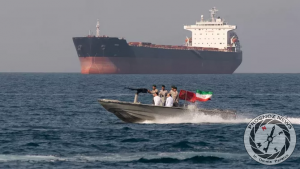
The 2026 war reinforced rather than weakened this reality. Despite massive air strikes, Iran has retained the capacity to threaten shipping, launch missile attacks and create economic disruption across the region. The continuing importance of the Strait of Hormuz has become dramatically evident once again. Even the possibility of Iranian interference with maritime traffic generated major concern in global energy markets. Roughly one-fifth of global oil and liquefied natural gas flows pass through the strait.
The lesson absorbed in Gulf capitals was not necessarily that Iran is weak. Rather, it was that Iran remains powerful enough that no durable regional security architecture can be built without taking her interests into account.
Secondly, the attacks appear to have strengthened Iranian nationalism.
One of the implicit assumptions behind much Western and Israeli strategic thinking was that severe military pressure might destabilise the Iranian political system. Yet external attacks often produce the opposite effect. Historical experience suggests that populations frequently rally around their governments when confronted by foreign military action.
Reports following the attacks indicated a surge in national solidarity within Iran, including amongst many citizens who had previously been critical of the regime. Rather than dividing the country, the conflict appears in some respects to have reinforced a sense of collective resistance.
This phenomenon should not surprise students of history. During the Blitz, British opposition to Winston Churchill largely disappeared. During the Iran-Iraq War, revolutionary Iran consolidated herself through mobilisation against an external enemy. National identity often becomes strongest when challenged.
Thirdly, the conflict accelerated the emergence of Iran as a permanent military-industrial power.
The attacks demonstrated that Iran’s missile and drone capabilities could not be eliminated through air strikes alone. Even after extensive bombardment, reports emerged of rapid reconstruction of missile infrastructure and continued military production.
The lesson for Tehran is obvious. If conventional military parity with Israel and the United States is impossible, then investment in dispersed missile production, drone warfare, cyber capabilities and asymmetric maritime operations becomes even more important.
In other words, the attacks may have encouraged exactly the strategic adaptations that make Iran most difficult to contain.
A fourth factor concerns America’s Gulf allies.
For decades the Gulf monarchies relied upon a relatively stable regional order underwritten by American power. The recent conflict has demonstrated the vulnerability of that system. Iranian retaliatory attacks and threats against regional infrastructure have exposed the risks faced by neighbouring states.
As a consequence, Gulf governments may become more inclined to pursue hedging strategies. They are unlikely to abandon the United States, but they may simultaneously seek accommodation with Iran, expand ties with China and cultivate greater strategic autonomy.
Such behaviour ultimately benefits Tehran because it weakens the possibility of a unified anti-Iranian coalition.
Another consequence may be economic rather than military.
The Gulf states have spent decades attempting to diversify their economies away from dependence upon hydrocarbons. Stability is essential for attracting foreign investment. The war reminded investors that the region remains vulnerable to major disruption.
Analysts have already warned that prolonged tensions could divert Gulf capital into defence spending and infrastructure protection rather than international investment and economic diversification.
Paradoxically, this creates a situation in which Iran’s ability to generate uncertainty becomes a form of power in itself. She does not need to dominate her neighbours militarily. She merely needs to retain the capacity to impose costs upon them.
Perhaps the most significant shift concerns the psychology of deterrence.
Before the attacks, many policymakers believed that overwhelming American and Israeli military superiority could decisively constrain Iran. After the attacks, that confidence appears less certain.
Iran has undoubtedly suffered enormous damage. Yet she survived. Her government has remained in place. Her military institutions continuedfunctioning. Her regional networks persist. Negotiations have resumed because neither side has proved capable of achieving decisive victory.
This matters enormously.
In international politics, survival is often interpreted as success. Small states that withstand pressure from stronger adversaries frequently emerge with enhanced prestige. The perception that Iran has absorbed a major military assault and remained standing may ultimately increase her credibility amongst allies, proxies and neutral observers throughout the Middle East.
None of this means that Iran has become stronger in every respect. Her economy remains fragile. Her infrastructure has suffered damage. Her nuclear programme has been set back, at least temporarily. She faces continuing sanctions and domestic pressures.
Nevertheless geopolitical influence is not measured solely by economic growth or military hardware. It is measured by the extent to which other actors must take your interests into account.
The central irony of the US-Israeli campaign may therefore be that, while it has damaged Iran physically, it simultaneously reinforced Iran’s strategic indispensability. The Gulf monarchies have been reminded that they cannot escape geography. The United States has been reminded that military superiority does not guarantee political outcomes. Israel has been reminded that Iranian influence extends far beyond nuclear facilities and missile silos.
If these conclusions prove correct, historians may eventually judge that the war did not inaugurate an era of Iranian decline. Instead, it may have marked the moment when Iran completed her transformation from a regional challenger into a permanent pole of power in the Gulf security system.
The balance of power would not have shifted because Iran won the war. It would have shifted because Iran survived it. And in geopolitics, survival against overwhelming force is often the beginning of influence rather than its end.
133 Views



Most Readings