The Limits of Buying Loyalty in the Russian Armed Forces
By Matthew Parish, Associate Editor
Thursday 25 June 2026
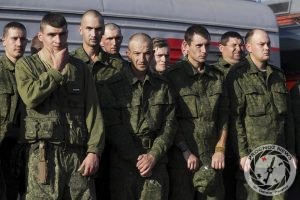
One of the most striking features of Russia’s wartime mobilisation system has been its reliance upon money. Since the autumn of 2022, the Kremlin has sought to avoid the political shock associated with compulsory mobilisation by constructing an elaborate market for military service. Contracts have been advertised across the country, signing bonuses have risen to extraordinary levels and regional governments have competed with one another to attract recruits. Yet the evidence increasingly suggests that financial incentives alone cannot indefinitely compensate for mounting battlefield losses and growing public awareness of the realities of military service.
This phenomenon illustrates a broader truth about states at war. Money can purchase participation, but it cannot indefinitely manufacture enthusiasm. As conflicts drag on, populations learn from the experiences of neighbours, relatives and returning veterans. Information spreads. Stories circulate. Expectations change. What may initially appear to be a lucrative opportunity gradually becomes recognised as a highly dangerous undertaking with uncertain rewards.
The Russian authorities appear to have responded to this problem by expanding recruitment efforts into ever broader segments of society. Recruiters have reportedly been dispatched across regions in search of new volunteers. Referral bonuses have increased substantially, creating financial incentives not merely for recruits but also for those who persuade others to enlist. At the same time, military service is increasingly marketed through indirect channels, with advertisements emphasising support roles, construction work, security duties or vaguely defined peacekeeping functions.
Such developments reveal a system reaching deeper into society in search of manpower. The easiest recruits have already been found. Those motivated by patriotism volunteered long ago. Those attracted by generous payments have largely made their decisions. What remains is a shrinking pool of citizens who are either reluctant, sceptical or actively opposed to participation.
This creates a fundamental dilemma for the Russian state. The war continues to consume personnel at a remarkable rate. Yet every additional recruit appears more expensive and more difficult to obtain than the last. The economic burden therefore grows at precisely the moment when the available human reservoir becomes increasingly resistant.
The quality of recruits may be becoming as significant a problem as their quantity. Reports from military sources suggest concerns not merely about declining numbers but also about declining motivation and preparation among those who do volunteer. A military organisation can compensate for shortages to a degree. It can mobilise reserves, redeploy units and increase the use of technology. What it cannot easily compensate for is a deterioration in morale. Armies depend ultimately upon confidence in leadership, trust among comrades and belief that sacrifices serve a meaningful purpose. Once these foundations weaken, combat effectiveness can decline far more rapidly than raw personnel statistics might suggest.
The Kremlin’s reluctance to announce another large-scale mobilisation is understandable. The partial mobilisation of 2022 demonstrated the political risks involved. Hundreds of thousands of Russians left the country. Public anxiety surged. The state succeeded in replenishing manpower but at considerable social and political cost. A second mobilisation would occur in a very different environment. The war has lasted far longer than many Russians expected. Casualty figures are substantially higher. Economic strains are increasingly visible. Public patience may therefore be considerably thinner.
Consequently the authorities appear determined to exhaust every alternative before revisiting compulsory mobilisation. Financial inducements, recruitment commissions, prison recruitment, migrant recruitment and increasingly creative advertising campaigns all represent attempts to postpone the moment at which the state must confront the political consequences of openly admitting a manpower crisis.
Yet history suggests that wars of attrition ultimately expose demographic realities. States can manipulate incentives and reshape recruitment systems, but they cannot escape arithmetic indefinitely. If losses exceed recruitment for a sustained period, the gap must eventually be addressed through either strategic adaptation or greater coercion. The question is not whether this logic applies to Russia. It applies to every country engaged in prolonged warfare.
The deeper significance of Russia’s recruitment difficulties therefore lies not merely in the numbers themselves. Rather, they reveal the growing tension between the Kremlin’s desire to maintain the appearance of normality and the extraordinary demands imposed by a war now in its fifth year. The longer that tension persists, the more difficult it becomes to reconcile political stability at home with military requirements at the front.
Hence the issue is not simply one of manpower. It is a test of the sustainability of an entire wartime political model — one built upon the assumption that a major war can be fought indefinitely while much of society continues to live as though it remains at peace.
100 Views



Most Readings